








Articles
Legal updates, insights and expert opinion on what matters to you.
If you have been injured in a car accident that was not your fault, you may be able to claim compensation. Our specialist Car Accident Claims Solicitors are here to help.
Fill in the form below to get in touch with one of our dedicated team members, or call our team today on: 0800 260 5010
From understanding your rights to what happens during a claim, our Personal Injury content hub brings together expert insight, practical guides and real client outcomes.
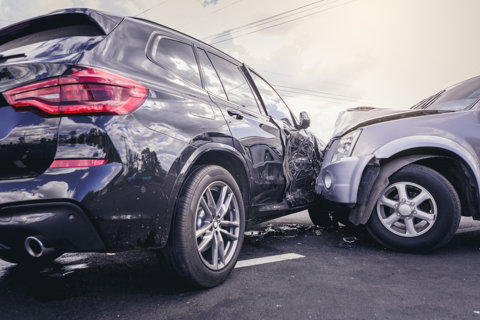
At Simpson Millar, we understand how devastating and frightening it is to be involved in a serious car accident, whether you are a driver, passenger, motorcyclist, e-scooter rider, cyclist, or pedestrian. When you choose us to handle your claim, you will have the expertise of experienced car accident claims solicitors who focus on helping you secure compensation and access the care and assistance you may need to rebuild your life. We place strong emphasis on your wellbeing and work tirelessly to achieve the best possible outcome for you.
Our Car Accident Claims Lawyers handle all types of car accident claims, including those involving uninsured or untraced drivers, foreign vehicles, passengers, cyclists and pedestrians injured in collisions with cars, and claims made on behalf of children. We offer a free, no-obligation initial assessment of your case and, in most cases, act on a No Win, No Fee basis, so there are no upfront costs, and you only pay our legal fees if your claim is successful.
Our Personal Injury team has a national reputation for successfully handling compensation claims, regardless of how complex the situation that caused your injury is or how serious your condition may be. The team has been recognised by the Legal 500 and Chambers and Partners for their work.
Everyone on our team understands the impact a personal injury can have and is committed to helping clients secure the compensation and rehabilitation they may need. You can be confident that we will act with compassion and sensitivity, whilst progressing your claim efficiently. We'll also speak to you in plain English and keep you regularly updated on to how your claim is progressing.
To find out if you may have a claim, call us on 0800 260 5010 or request a callback at a time that suits you.
| Injury Category | Typical Description | General Damages Range (£) |
| Minor Injuries | Full recovery less than 7 days | A few hundred to £840 |
| Minor Injuries | Full recovery less than 28 days | £840-£1,680 |
| Minor Injuries | Full recovery less than 3 months | £1,680-£2,990 |
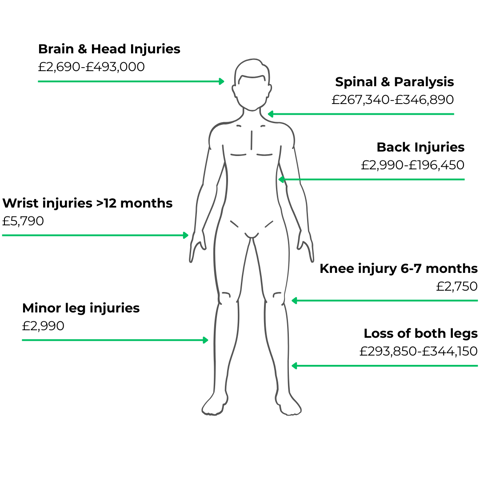
| Back Injuries | Minor (recovery within 3–12 months) | £2,990-£5,310 |
| Back Injuries | Moderate (muscle/ligament, long recovery) | £15,260-£33,880 |
| Back Injuries | Severe (disc/root damage, chronic pain) | £47,320-£196,450 |
| Brain & Head Injuries | Minor head/brain | £2,690-£15,980 |
| Brain & Head Injuries | Less severe ABI | £18,750-£52,550 |
| Brain & Head Injuries | Moderate ABI | £52,550-£267,340 |
| Brain & Head Injuries | Moderately severe ABI | £267,340-£344,150 |
| Brain & Head Injuries | Very severe ABI | £344,150-£493,000 |
| Spinal & Paralysis | Paraplegia | £267,340-£346,890 |
| Spinal & Paralysis | Tetraplegia | £396,140-£493,000 |
| Neck Injuries | Moderate | £33,020-£50,850 |
| Neck Injuries | Moderately severe | £60,080-£73,970 |
| Neck Injuries | Severe | £86,680-£172,970 |
| PTSD | Less severe | £5,220-£10,810 |
| PTSD | Moderate | £10,810-£30,580 |
| PTSD | Moderately severe | £30,580-£79,080 |
| PTSD | Severe | £79,080-£133,000 |
*ABI (Acquired brain injury)
Compensation amounts are taken from the Judicial College Guidelines (18th edition). These guidelines are used by courts, solicitors and insurers in England and Wales to assess compensation in personal injury claims.
You tell us what happened and how it has affected you. We will advise you on whether you may have a case and explain the next steps clearly. There is no obligation to proceed.
We build your case by collecting the evidence needed to help establish who was responsible for the accident and your injuries.
We arrange for an independent medical expert to assess your injuries. Their report helps confirm the extent of your injuries and any ongoing or future care or rehabilitation needs.
Once we have all the information, your solicitor will calculate the potential value of your claim, covering both general and special damages.
If the other side accepts responsibility, we can apply for an interim payment before your case is fully settled, giving you earlier access to funds for medical costs or living expenses.
Most car accident claims are resolved through negotiation, without going to court. If the other side disputes liability, we will continue working to try and reach a settlement. In the small number of cases that do proceed to court, our solicitors will represent you throughout the process.

Car accidents can happen for many reasons. Common causes include driver error, speeding, distraction, misjudgement of speed or distance, driving under the influence of alcohol or drugs, careless or reckless driving, poor road or weather conditions, and mechanical faults.
The injuries that result can range from minor to life-altering. Common injuries include:
If another person was wholly or partly responsible for your accident and you were injured as a result, you are likely eligible to make a car accident compensation claim.
Some accidents involve multiple factors, and fault is not always straightforward. Even if you feel you were partly to blame, another party may still share responsibility, and you may still be entitled to compensation. If you were not wearing a seatbelt at the time, your compensation may be reduced, but it does not necessarily prevent you from making a claim.
You do not have to have been the driver to claim. Passengers, e-scooter riders, cyclists, motorcyclists, and pedestrians injured in a car accident may all be eligible. You can also make a claim on behalf of a child under 18, or for someone who lacks the mental capacity to make a claim themselves.
If the other driver was uninsured or left the scene, you can still make a claim through the Motor Insurers’ Bureau (MIB), which is a scheme set up to compensate victims of accidents caused by uninsured or untraced drivers. This means you may still be able to claim compensation, even if the driver cannot be identified or does not have valid insurance. Our team has extensive experience handling MIB claims and can guide you through the process from start to finish.
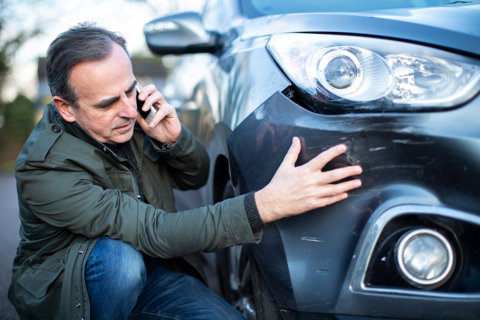
Building a strong case depends on gathering clear, well-organised evidence. This may include:
Your solicitor will handle the evidence gathering process in order to build your claim. You can help by noting down key details as soon as possible after the incident and keeping any relevant documents together in one place.
We usually act on a No Win, No Fee basis. This means there are no upfront legal costs, and you will not have to pay our legal fees if your claim is unsuccessful, although you may still need to pay certain costs known as disbursements.
If your case is successful, the other side will usually pay a portion of our legal costs, though you may also need to contribute to some costs from your compensation. We will explain this to you clearly at the outset so there are no surprises.
Disbursements can include costs such as court fees or the cost of medical or expert reports. After the Event (ATE) insurance can often be arranged to help cover these costs, and your case handler will explain how this works when you start your claim.
Fill in the form below to get in touch with one of our dedicated team members, or call our team today on: 0800 260 5010
We're helping people just like you all over the UK! Get in touch with our dedicated team today!
Road users have a legal duty of care towards others under the Road Traffic Act 1988 and the Highway Code. If another driver failed in that duty and caused an accident in which you were injured, you may be eligible to claim compensation.
To succeed with a claim, it needs to be shown that another road user was responsible for the accident, that you were injured as a result, and that the accident happened within the the relevant time limit, usually three years (unless you were under 18 years old at the time of the accident or lack mental capacity).
A car accident compensation claim is the legal process that lets you seek financial support for the injuries and financial losses you have experienced. While an insurer may offer an early settlement, it is important to seek legal advice before accepting, to make sure any offer reflects the full impact the incident has had on your life, both now and in the future.
Compensation is designed to help you recover and rebuild your life after an accident. It can cover:
Compensation is calculated across two categories.
In most cases, you have three years from the date of the accident to start a claim. If your injury was not immediately apparent, the three-year period may start from the date of diagnosis or from when you first became aware that it may have been caused by the accident.
There are exceptions. For people who lack mental capacity, the time limit is paused and will only start if they regain capacity, which means in some cases there may be no time limit to bring a claim.
If the injured person is under 18, the three-year time limit does not begin until their 18th birthday, meaning they usually have until their 21st birthday to make a claim. A parent or guardian can also make a claim on behalf of a child at any time before they turn 18.
It is always better to get in touch as soon as possible, while evidence is easier to gather and events are still fresh in people’s minds.
If you have been in a car accident, these steps can help keep you safe and support any future claim:
In most cases, car accident claims are settled out of court through negotiation or mediation. In the unlikely event your claim does proceed to court, you may not need to attend yourself. We will guide you throughout the entire process and keep you fully informed at every stage.
It is not unusual for the other party to dispute liability, particularly when the circumstances are unclear. If this happens, your solicitor will gather and present evidence to support your account of the accident. This can include witness statements, dashcam or CCTV footage, police reports, and independent expert evidence, such as accident reconstruction, if needed.
In some cases, liability is shared between parties. Where this is agreed, your compensation will be reduced to reflect the proportion your share of responsibility. For example, if you are found to be 30% responsible, your compensation would be reduced by 30%.
Making a personal injury claim against the other driver should not automatically affect your own insurance premiums. A personal injury claim is made against the at-fault driver's insurance, not your own policy. However, if you also make a claim on your own insurance, for example, to cover damage to your behicle, your insurer may treat this differently depending on your policy terms.
If you are concerned about the impact on your insurance, it is worth speaking to your insurer directly or asking your solicitor to explain what you can expect. Our team can help you understand the difference between the types of claims and how each works in practice.
It depends on the extent of your injuries and the complexity of your claim. In some cases, more straightforward injuries that heal within a short period of time, such as a simple bone fracture, may settle within around 6 to 12 months. More serious cases, particularly those involving long-term or life-changing injuries, can take longer, sometimes 36 months or more.
It is often important to wait until your condition has stabilised before settling your claim, so that the full impact of your injuries can be properly assessed.
To find out if you may have a claim, call us on 0800 260 5010 or request a callback online to arrange your free, no-obligation initial claims assessment.






 We're rated‘Excellent’
Fill in the form below to get in touch with one of our dedicated team members, or call our team today on: 0800 260 5010