







Articles
Legal updates, insights and expert opinion on what matters to you.
If you were injured and your vehicle was damaged because of a pothole on a public road or pavement and you believe it may have been caused by a failure to properly maintain the area, you may be able to make a claim. Our specialists in Personal Injury claims can investigate the circumstances of the accident and help you understand your options.
Fill in the form below to get in touch with one of our dedicated team members, or call our team today on: 0800 260 5010
From understanding your rights to what happens during a claim, our Personal Injury content hub brings together expert insight, practical guides and real client outcomes.
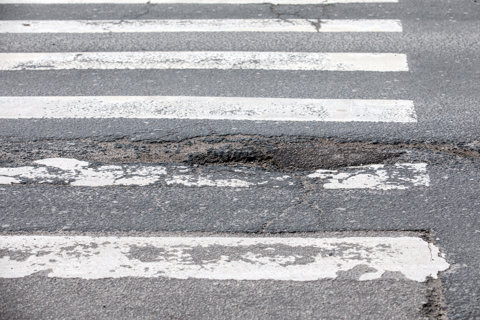
Potholes can cause serious accidents for pedestrians, cyclists, motorcyclists, and motorists. A cyclist thrown from their bike, a motorcyclist losing control after striking a road defect, or a pedestrian injured after tripping on a damaged surface can all suffer significant injuries and financial losses.
Local authorities are responsible for inspecting and maintaining many public roads and pavements. Where a pothole or other defect should reasonably have been identified and repaired, and someone is injured as a result, it may be possible to bring a claim.
At Simpson Millar, our Personal Injury Solicitors are members of the Association of Personal Injury Lawyers (APIL) and hold the Law Society's Personal Injury Accreditation. As a firm, we are also ranked in the Legal 500 and Chambers & Partners.
We have a strong track record in road and pavement defect claims against local authorities across England and Wales. Most cases are handled on a No Win, No Fee basis, and the initial assessment is free, and without any obligation to proceed.
To discuss your circumstances and find out more about your options, call 0800 260 5010 or request a callback.
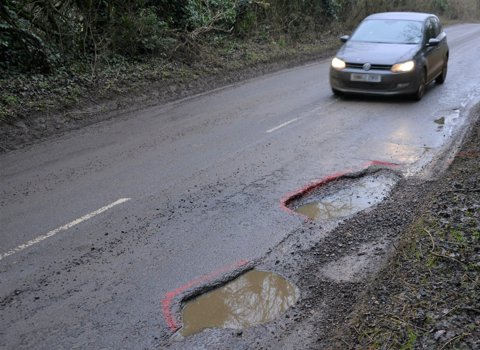
Local authorities are responsible for maintaining many public roads and pavements under section 41 of the Highways Act 1980. If a pothole or other road defect causes an accident, the key question is often whether the council knew, or should reasonably have known, about the defect and failed to repair it within a reasonable period of time.
Councils and local authorities can defend claims under section 58 of the Highways Act 1980 if they can show they took reasonable care to inspect and maintain the road or pavement. Factors such as inspection records, previous reports of the defect, repair history, and the type of road involved can all be relevant when assessing whether a claim may be possible. As part of investigating a claim, we can obtain and review this evidence and, where appropriate, work with independent highway engineers if liability is disputed.
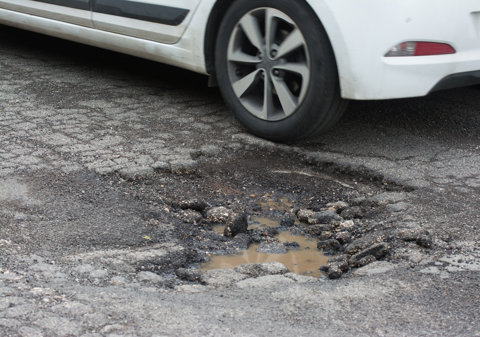
For more information about claims involving local authorities, including accidents in parks, playgrounds, public buildings, and other council maintained areas, see out injury claims against the council service.
| Injury Category | Typical Description | General Damages Range (£) |
| Minor Injuries | Full recovery less than 7 days | A few hundred to £840 |
| Minor Injuries | Full recovery less than 3 months | £1,680-£2,990 |
| Back Injuries | Minor (recovery within 3–12 months) | £2,990-£5,310 |
| Back Injuries | Moderate (muscle/ligament, long recovery) | £15,260-£33,880 |
| Back Injuries | Severe (disc/root damage, chronic pain) | £47,320-£196,450 |
| Brain & Head Injuries | Minor head/brain | £2,690-£15,980 |
| Brain & Head Injuries | Moderate ABI | £52,550-£267,340 |
| Orthopaedic Injuries | 6–7 month knee injury | £2,750 |
| Orthopaedic Injuries | Minor leg injury (few months) | £2,990 |
| Orthopaedic Injuries | 12 months wrist injury | £5,790 |
| Orthopaedic Injuries | 12 months elbow injury | £4,310 |
| Orthopaedic Injuries | Minor hip (full recovery) | £4,820 |
| Orthopaedic Injuries | Loss of both legs | £293,850-£344,150 |
*ABI (Acquired brain injury)
Compensation amounts are taken from the Judicial College Guidelines (18th edition). These guidelines are used by courts, solicitors and insurers in England and Wales to assess compensation in personal injury claims.

Pothole claims can be complex, particularly where a council argues that it had reasonable inspection and maintenance systems in place. Claims often turn on evidence such as inspection records, maintenance histories, complaint logs, and information about when the defect was first reported. Assessing that evidence may require detailed investigation and, in some cases, independent expert input on whether the defect should have been identified or repaired before the accident.
Our team has experience handling road and pavement defect claims against local authorities across England and Wales. We know what records to request, how to analyse maintenance and inspection evidence, and how to challenge a council's position where appropriate.
If you have been injured in a pothole accident, call 0800 260 5010 or submit a callback request for a free, no-obligation claim assessment.
Once we have taken your initial instructions, your claim will be passed to a Personal Injury Solicitor who specialises in the type of claim you are pursuing. We’ll then figure out who exactly is responsible for the injury you’ve suffered.
If the other party admits fault for the accident, your Personal Injury Lawyer will get your medical records and get you examined by a suitable medical professional. The expert will review your records, examine you and write a medico-legal report. This report will be written by either a doctor or another type of health professional, for legal proceedings. It’s an essential document when it comes to evidence, as it’ll be used to explain what your physical or mental injuries are. If you have more than one injury, you could be examined by multiple different experts.
When the medical evidence is finalised and your Personal Injury Solicitor has calculated how severeyour financial losses are, they will figure out the value of your claim and then advise you on the sum of the compensation settlement offer you should make to the other party. In some cases, your Personal Injury Solicitor might advise you to invite the defendant to make a settlement offer, instead of making one to them.
Ideally, the other party who is responsible for the injury you sustained will accept that they’re at fault or they’ll want to negotiate a settlement outside of Court.
We're helping people just like you all over the UK! Get in touch with our dedicated team today!
There is no minimum size that automatically means a claim can be made. As a guide, a road pothole measuring around 40mm or more in depth, and a pavement trip hazard measuring around 25mm are often considered significant enough to require repair.
These are widely applied thresholds, not fixed legal rules. A shallower defect in a location with heavy footfall, or near a care home or school, may still support a claim. Context and location matter as much as the measurement.
A post-accident repair is actually useful evidence as it tends to confirm the defect was significant enough to warrant attention. Historical council records, complaint logs from other members of the public, and street-level mapping data can also establish what the defect looked like before it was filled. If you contact us promptly, we can advise on what evidence may still be available.
If you were injured in a pothole accident, it may be possible to recover the cost of vehicle damage as part of your claim. This could include damage such as tyre blowouts, wheel or rim damage, or suspension damage caused by the pothole.
Whether a claim may be possible will depend on the circumstances, including whether the defect was on a public road maintained by the local authority and whether it should have been identified and repaired before the accident.
If you are able to do so safely, measure and photograph the pothole as soon as possible, ideally with an object in the image to show its size. Record the exact location, street name, and date of the accident.
You should also photograph any injuries and vehicle damage, take witness contact details, report the defect to the council, and keep any reference number or acknowledgement you received. Seek medical attention where appropriate and retain any medical records, receipts, and evidence of financial losses connected to the accident.
In most cases, you have three years from the date of your accident to make a compensation claim. For children, the three year time limit does not begin until their 18th birthday.
Although the legal time limit is often three years, it is usually best to act sooner where possible. Potholes may be repaired after an accident, making it harder to gather evidence later. For this reason, it is sensible to seek advice once your injuries allow.
There's no set amount of compensation you could get. The total amount is decided by a range of factors, most of which are unique to your circumstances.
Personal injury compensation awards are split into two categories:
Personal Injury Solicitors and the Court often refer to the Judicial College Guidelines when valuing claims. These guidelines provide compensation brackets for different types of injuries and help ensure claims are assessed consistently. Our team will explain how compensation is valued, what factors may affect the amount awarded, and how any financial losses connected to your injury are taken into account.
If your actions contributed to the accident, the law may treat this as contributory negligence. This means that any compensation awarded could be reduced to reflect your share of responsibility.
For example, factors such as poor visibility, failing to use appropriate lights when cycling, or other circumstances may be taken into account. Being partly responsible does not automatically prevent you from making a claim.
Call 0800 260 5010 or request a callback. We can discuss what happened, answer any questions you may have, and explain the evidence often needed in pothole accident claims. Your initial claim assessment is free and there is no obligation to proceed.




 We're rated‘Excellent’
Fill in the form below to get in touch with one of our dedicated team members, or call our team today on: 0800 260 5010