







Articles
Legal updates, insights and expert opinion on what matters to you.
If you were injured in an accident in a public place and believe it may have been caused by a property owner or occupier failing to take reasonable steps to keep visitors safe, you may be able to make a claim. Our specialists in Personal Injury claims can assess your circumstances, explain your options, and help you understand whether a claim may be possible.
Fill in the form below to get in touch with one of our dedicated team members, or call our team today on: 0800 260 5010
From understanding your rights to what happens during a claim, our Personal Injury content hub brings together expert insight, practical guides and real client outcomes.

Accident claims can arise from incidents in supermarkets, shops, restaurants, pubs, hotels, shopping centres, car parks, parks, leisure facilities, and other public locations.
These accidents can happen when businesses or organisations fail to address hazards that may put visitors at risk. Examples can include failing to warn visitors about a wet floor, leaving damaged steps unrepaired, or failing to treat icy surfaces during freezing weather. Businesses and organisations that invite members of the public onto their premises have a legal duty to take reasonable steps to keep visitors safe. Where that duty may have been breached and someone is injured as a result, it may be possible to make a claim.
At Simpson Millar, our Personal Injury Solicitors are members of the Association of Personal Injury Lawyers (APIL), and hold the Law Society's Personal Injury Accreditation. As a firm, we are also ranked in the Legal 500 and Chambers & Partners. We have recovered substantial compensation for people following accidents in public places across England and Wales. Most cases are handled on a No Win, No Fee basis, and the initial claim assessment is free, with no obligation to proceed..
To discuss your circumstances and find out more about your options, call 0800 260 5010 or request a callback.

Our Personal Injury Solicitors have experience helping people pursue claims arising from:
For more information about claims involving local authorities, see our injury claims against the council service.

Establishing liability in a public place accident goes beyond simply showing that you were hurt on someone else's property. You must prove that the occupier knew, or should have known, of the hazard and failed to address it promptly. The defendant holds the most useful evidence for this, for example, cleaning logs, maintenance diaries, inspection records, and CCTV footage. If a compensation claim is being pursued, securing that material requires a formal legal request. A simple phone call from you is unlikely to result in evidence being handed over.
Our team has handled public liability claims against major retailers, hospitality businesses, local authorities, and property owners. For serious injuries sustained in a public place, our Major Trauma Unit can coordinate specialist rehabilitation (funded by interim payments) alongside the legal claim.
CCTV footage is usually deleted within 28 days. Call us before the evidence is gone. Phone 0800 260 5010 or use the online callback form on our website.
| Injury Category | Typical Description | General Damages Range (£) |
| Minor Injuries | Full recovery less than 7 days | A few hundred to £840 |
| Minor Injuries | Full recovery less than 28 days | £840-£1,680 |
| Minor Injuries | Full recovery less than 3 months | £1,680-£2,990 |
| Back Injuries | Minor (recovery within 3–12 months) | £2,990-£5,310 |
| Back Injuries | Moderate (muscle/ligament, long recovery) | £15,260-£33,880 |
| Back Injuries | Severe (disc/root damage, chronic pain) | £47,320-£196,450 |
| Orthopaedic Injuries | 6–7 month knee injury | £2,750 |
| Orthopaedic Injuries | Minor leg injury (few months) | £2,990 |
| Orthopaedic Injuries | 12 months wrist injury | £5,790 |
| Orthopaedic Injuries | 12 months elbow injury | £4,310 |
| Orthopaedic Injuries | Minor hip (full recovery) | £4,820 |
*ABI (Acquired brain injury)
Compensation amounts are taken from the Judicial College Guidelines (18th edition). These guidelines are used by courts, solicitors and insurers in England and Wales to assess compensation in personal injury claims.
Once we have taken your initial instructions, your claim will be passed to a Personal Injury Solicitor who specialises in the type of claim you are pursuing. We’ll then figure out who exactly is responsible for the injury you’ve suffered.
If the other party admits fault for the accident, your Personal Injury Lawyer will get your medical records and get you examined by a suitable medical professional. The expert will review your records, examine you and write a medico-legal report. This report will be written by either a doctor or another type of health professional, for legal proceedings. It’s an essential document when it comes to evidence, as it’ll be used to explain what your physical or mental injuries are. If you have more than one injury, you could be examined by multiple different experts.
When the medical evidence is finalised and your Personal Injury Solicitor has calculated how severeyour financial losses are, they will figure out the value of your claim and then advise you on the sum of the compensation settlement offer you should make to the other party. In some cases, your Personal Injury Solicitor might advise you to invite the defendant to make a settlement offer, instead of making one to them.
Ideally, the other party who is responsible for the injury you sustained will accept that they’re at fault or they’ll want to negotiate a settlement outside of Court.
We're helping people just like you all over the UK! Get in touch with our dedicated team today!
The occupier of the premises where your accident occurred carries the responsibility. Under the Occupiers' Liability Act 1957, the occupier must take reasonable care to ensure visitors are safe. That duty rests with whoever controls and manages the space, whether it’s a business, a local authority, a landlord, or a property management company. We identify the correct defendant and provide you with continued support throughout the claims process.
The Occupiers' Liability Act 1957 places a duty of care on occupiers to take reasonable steps to ensure visitors are reasonably safe when using their premises for the purposes for which they are invited or permitted to be there. What amounts to reasonable care will depend on the circumstances, although it may include measures such as maintaining floors and walkways, repairing defects, providing adequate lighting, and warning visitors about temporary hazards where appropriate.
Different considerations may apply where children are involved, as occupiers may be expected to take into account that children can be less aware of potential dangers than adults. Separate provisions also apply to certain non-visitors under the Occupiers' Liability Act 1984. In some circumstances, occupiers may owe a limited duty to people who enter land or premises without permission if they are aware of a danger and can reasonably be expected to offer some protection against the risk.
The fact that a hazard appeared shortly before an accident does not automatically prevent a claim. The key question is often whether the occupier had reasonable systems in place to identify, inspect, and deal with potential risks.
Each case depends on its individual circumstances. Factors such as inspection records, cleaning procedures, staff training, and how long the hazard was present may all be relevant when assessing whether a claim may be possible.
Car park operators and occupiers owe visitors a duty to take reasonable care to keep them reasonably safe. In some circumstances, accidents involving icy surfaces, potholes, poor lighting, or uneven surfacing may give rise to a claim if there is evidence that reasonable steps were not taken to identify, maintain, or address the hazard.
Identifying who owns and maintains a car park is often the first step in investigating a claim. That is not always straightforward, particularly where ownership and management responsibilities are shared. Our team can help investigate who may be responsible, obtain relevant evidence, and explain your options, allowing you to focus on your recovery.
Possibly. If you contributed to the accident, the law may treat this as contributory negligence. This means that any compensation awarded could be reduced to reflect your share of responsibility.
Whether contributory negligence applies, and to what extent, will depend on the circumstances of the accident. Being partly responsible does not automatically prevent you from making a claim.
In most cases, you have three years from the date of your accident to make a compensation claim. For children, the three-year time limit starts running from the date of their 18th birthday.
One important factor to consider is that CCTV recordings are typically kept for between 28 and 31 days before being overwritten. Contacting us as soon as you can gives us the best chance of securing that footage, which can be crucial to your claim's success.
If possible, take the following steps:
Depending on the circumstances, additional evidence may also be available, such as CCTV footage, inspection records, cleaning logs, maintenance records, and accident reports. Our team can help obtain relevant evidence as part of investigating a potential claim.
Call 0800 260 5010 or request a callback. We offer a free initial claim assessment and can explain whether you may be able to make a claim, how the process works, and the funding options available to you. There is no obligation to proceed.




 We're rated‘Excellent’
When someone goes about their daily life, the last thing they would think about is being involved in an accident – but sadly, accidents in public places can and do occur. Public liability is the term used to summarise the duty of care in which a company that owns a public space has towards people that use it.
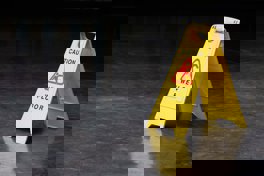
We successfully supported and represented a man who was injured after he slipped on a wet floor in a supermarket toilet. Our client, Mr. F, was at his local supermarket when he went into the toilets but slipped on a wet floor and suffered damage to his left hip.
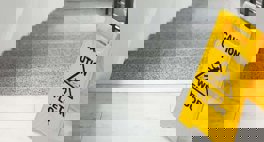
Our client was visiting a hospital when she fell over on a floor causing her a fracture injury. The hospital had not taken reasonable steps to ensure their cleaning company was carrying out their work correctly, and we secured £25,000 for the client in compensation.
Fill in the form below to get in touch with one of our dedicated team members, or call our team today on: 0800 260 5010