






Articles
Legal updates, insights and expert opinion on what matters to you.
If you were injured on council-owned or council-maintained land and believe it may have been caused by the local authority failing to take reasonable steps to keep the area safe, you may be able to make a claim. Our specialists in Personal Injury claims can guide you through the process and help you gather the evidence needed to support your case.
Fill in the form below to get in touch with one of our dedicated team members, or call our team today on: 0800 260 5010
From understanding your rights to what happens during a claim, our Personal Injury content hub brings together expert insight, practical guides and real client outcomes.
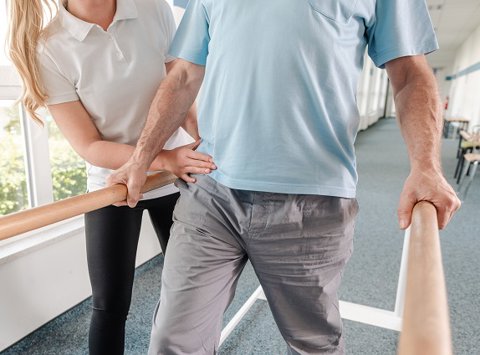
Local authorities are responsible for managing and maintaining many public spaces, including roads, pavements, parks, playgrounds, car parks, leisure centres, and public buildings. They have a legal duty to take reasonable steps to keep these areas safe for people using them. Where that duty may have been breached and someone is injured as a result, it may be possible to bring a claim.
Simpson Millar is a national firm that has been recognised in the Legal 500 and Chambers & Partners. We also hold a Law Society's Personal Injury Accreditation and our solicitors are APIL members that have recovered millions of pounds in compensation in claims against councils across England and Wales. We act on a No Win, No Fee basis in most cases, and offer a free, no-obligation initial claim assessment.
To speak to one of our experts about a claim against a council, call 0800 260 5010 or request a callback.

Local authorities are responsible for maintaining public highways, including many roads and pavements, under the Highways Act 1980. They are expected to carry out reasonable inspections and repairs to help keep these areas safe. Where a council fails to identify, inspect, or repair a defect within a reasonable time, and someone is injured as a result, it may be possible to make a claim.
Councils are also responsible for many public spaces, including parks, leisure centres, playgrounds, and public buildings. As occupiers of these premises, they owe visitors a duty of care under the Occupiers' Liability Act 1957. A foreseeable hazard left unaddressed that results in a visitor's injury may result in a compensation claim.

Our Personal Injury Solicitors have successfully brought compensation claims against councils for:
Pothole claims against councils are among the most common types of claims we deal with. Our dedicated pothole accident claims service covers the specific evidence requirements and the council's defences in detail.
| Injury Category | Typical Description | General Damages Range (£) |
| Minor Injuries | Full recovery less than 7 days | A few hundred to £840 |
| Minor Injuries | Full recovery less than 28 days | £840-£1,680 |
| Minor Injuries | Full recovery less than 3 months | £1,680-£2,990 |
| Back Injuries | Minor (recovery within 3–12 months) | £2,990-£5,310 |
| Back Injuries | Moderate (muscle/ligament, long recovery) | £15,260-£33,880 |
| Back Injuries | Severe (disc/root damage, chronic pain) | £47,320-£196,450 |
| Brain & Head Injuries | Minor head/brain | £2,690-£15,980 |
| Brain & Head Injuries | Less severe ABI | £18,750-£52,550 |
| Brain & Head Injuries | Moderate ABI | £52,550-£267,340 |
| Orthopaedic Injuries | 6–7 month knee injury | £2,750 |
| Orthopaedic Injuries | Minor leg injury (few months) | £2,990 |
| Orthopaedic Injuries | 12 months wrist injury | £5,790 |
| Orthopaedic Injuries | 12 months elbow injury | £4,310 |
| Orthopaedic Injuries | Minor hip (full recovery) | £4,820 |
*ABI (Acquired brain injury)
Compensation amounts are taken from the Judicial College Guidelines (18th edition). These guidelines are used by courts, solicitors and insurers in England and Wales to assess compensation in personal injury claims.
Once we have taken your initial instructions, your claim will be passed to a Personal Injury Solicitor who specialises in the type of claim you are pursuing. We’ll then figure out who exactly is responsible for the injury you’ve suffered.
If the other party admits fault for the accident, your Personal Injury Lawyer will get your medical records and get you examined by a suitable medical professional. The expert will review your records, examine you and write a medico-legal report. This report will be written by either a doctor or another type of health professional, for legal proceedings. It’s an essential document when it comes to evidence, as it’ll be used to explain what your physical or mental injuries are. If you have more than one injury, you could be examined by multiple different experts.
When the medical evidence is finalised and your Personal Injury Solicitor has calculated how severeyour financial losses are, they will figure out the value of your claim and then advise you on the sum of the compensation settlement offer you should make to the other party. In some cases, your Personal Injury Solicitor might advise you to invite the defendant to make a settlement offer, instead of making one to them.
Ideally, the other party who is responsible for the injury you sustained will accept that they’re at fault or they’ll want to negotiate a settlement outside of Court.

Claims against local authorities often require detailed evidence about how a defect arose, whether the council knew or should have known about it, and what steps were taken to address it. Our team has experience obtaining and reviewing the inspection records, maintenance logs, complaint histories, and other evidence needed to investigate these claims.
Where appropriate, we work with independent highway engineers and medical experts to build a clear picture of how an accident happened and the impact it has had on your life. For children injured on council land, we can support families through the litigation friend process and, where an injury affects a child's education, our Education Law team can provide separate advice on issues such as school attendance and special educational needs.
To discuss your circumstances and arrange a free initial claim assessment, call 0800 260 5010 or request a callback. There is no obligation to proceed.
We're helping people just like you all over the UK! Get in touch with our dedicated team today!
Possibly. Whether a claim may be possible will depend on factors such as the nature of the defect, whether the council was responsible for maintaining the area, and whether it had a reasonable opportunity to identify and repair the hazard.
Possibly. If you contributed to the accident, the law may treat this as contributory negligence. This means that any compensation awarded could be reduced to reflect your share of responsibility. Being partly responsible does not automatically prevent you from making a claim.
Yes. A parent, guardian, or another suitable adult can usually bring a claim on behalf of a child as their litigation friend.
Under the Limitation Act 1980, the usual three year time limit for making a personal injury claim does not begin until a child's 18th birthday. This means a claim can usually be brought on a child's behalf at any time before they turn 18. If no claim has been made by then, they will normally have until their 21st birthday to bring a claim themselves.
In most cases, you have three years from the date of the accident to start a personal injury claim. Different rules may apply in some circumstances, including claims involving children.
Although the legal time limit is often three years, it is usually best to seek advice as soon as possible. Defects may be repaired quickly, CCTV footage may be deleted, and other evidence can become harder to obtain over time.
If possible, try to gather:
Depending on the circumstances, maintenance records, inspection logs, CCTV footage, and previous reports of the defect may also be relevant. If CCTV footage may have captured the accident, it is important to act quickly, as recordings are often deleted or overwritten after a relatively short period. Our team can help obtain relevant evidence as part of investigating a potential claim.
Call 0800 260 5010 or request a callback. We can discuss what happened, explain the evidence that may be needed, and help you understand the steps involved in bringing a claim against a local authority. Your initial claim assessment is free and there is no obligation to proceed.




 We're rated‘Excellent’
In this guide, we show the different amounts of personal injury compensation which can be awarded in the UK for different levels of spinal cord injuries, ranging from moderate spinal injury to the most severe spinal injury cases.

If you suffer a manual handling injury at work and believe it’s because your employer didn’t do enough to keep you safe, contact our expert Personal Injury Solicitors.

A concussion may initially appear to be a relatively minor injury. Someone may hit their head in a fall, road traffic collision or workplace accident, attend hospital and return home expecting their symptoms to improve.
Fill in the form below to get in touch with one of our dedicated team members, or call our team today on: 0800 260 5010