Why motorcyclists are at higher risk
Motorcycles are smaller, lighter and harder to see than cars, vans or lorries. They can be hidden in blind spots, missed at junctions or misjudged when approaching from a distance. Many collisions happen not because a rider is behaving dangerously, but because another road user fails to look properly or does not appreciate how quickly a motorcycle is approaching.
Common situations that can lead to motorcycle collisions include:
- A driver pulling out from a side road without seeing the motorcycle.
- A vehicle turning right across the rider’s path.
- A driver changing lanes without checking mirrors and blind spots.
- A car door being opened into the rider’s path.
- A vehicle braking suddenly in front of the rider.
- A driver misjudging the rider’s speed or distance.
- Poor road surfaces, potholes, loose gravel or diesel spills causing the rider to lose control.
For motorcyclists, the condition of the road surface can be just as dangerous as the behaviour of other drivers. Unlike cars, bikes only have two wheels and much less contact with the road, which means they rely heavily on grip and balance. Even a small hazard that a car might barely notice can cause a rider to lose control.
For example, a pothole that might feel like a minor bump in a car can destabilise a motorcycle, especially at speed or when cornering. Loose chippings, gravel or sand can reduce tyre grip and cause the bike to slide. Standing water can lead to aquaplaning, where the tyres lose contact with the road altogether. Leaves, mud or diesel spills can be particularly dangerous because they are often slippery and difficult to see until it is too late.
Uneven road surfaces, worn markings, poor repairs and damaged drain covers can also create sudden changes in traction. These are especially risky at junctions, roundabouts or bends, where riders may already be braking or leaning into a turn.
Because motorcyclists are more exposed and have less stability than other vehicles, they often have less time to recover if something goes wrong. This is why road maintenance and surface conditions play such a critical role in motorcycle safety, and why even everyday hazards can lead to serious or life-changing injuries for riders.

The law in England and Wales: who is responsible after a motorcycle accident?
In England and Wales, road users owe each other a duty of care. This means they must take reasonable care to avoid causing harm to others. Drivers, motorcyclists, cyclists, pedestrians and commercial vehicle drivers all have responsibilities when using the road.
A motorcycle accident claim is usually based on negligence. In simple terms, this means showing that someone failed to take reasonable care, and that this failure caused injury or loss.
Examples may include:
- A driver failing to check properly before pulling out.
- A driver speeding or driving too fast for the conditions.
- A driver using a mobile phone or being distracted.
- A driver failing to give way at a junction.
- A vehicle being driven without proper care and attention.
- A highway authority failing to deal with a dangerous road defect in some circumstances.
The Highway Code is the official set of rules, advice and guidance for all road users in the UK, including drivers, motorcyclists, cyclists and pedestrians. It explains how people are expected to behave on the road to keep themselves and others safe.
Whilst the Highway Code is not itself a full statement of the law, many of its rules are backed by legal requirements. Even where a rule is advisory, it can still be used as important evidence when looking at what reasonable and safe behaviour should have been in a particular situation.
If a driver breaches the Highway Code and causes a collision, this can support an argument that they failed to take reasonable care. In legal terms, this may help establish negligence and strengthen a claim for compensation.
What does contributory negligence mean?
When looking at who is responsible for a motorcycle accident, it is not always a case of one person being entirely at fault. In some situations, it may be argued that both parties played a role in what happened. This is where the concept of contributory negligence becomes important.
Contributory negligence is a legal principle which means that the injured person may have partly contributed to the accident, or to the severity of their injuries. It does not prevent a claim from being made, but it can reduce the amount of compensation awarded to reflect that shared responsibility.
In motorcycle accident claims, this argument is sometimes raised where it is suggested that the rider’s actions may have increased the risk of the collision or the extent of the injuries. For example, it may be alleged that the rider was:
- Travelling too fast for the conditions
- Filtering through traffic in an unsafe way
- Overtaking where it was not appropriate
- Not wearing suitable protective gear
- Riding without adequate lighting in poor visibility
- Failing to react to a developing hazard
Any such argument must be supported by clear evidence. It should not be based on general assumptions about motorcyclists or how they ride. The key question is whether the rider acted reasonably in the circumstances.
If contributory negligence is established, the compensation awarded is reduced by a percentage that reflects the rider’s level of responsibility. For example, if a rider is found to be 20% responsible, their compensation would be reduced by 20%.
This is why it is so important to properly investigate how the accident happened. Evidence such as CCTV, helmet camera footage, witness statements and expert analysis can make a significant difference when establishing liability and ensuring that responsibility is assessed fairly.
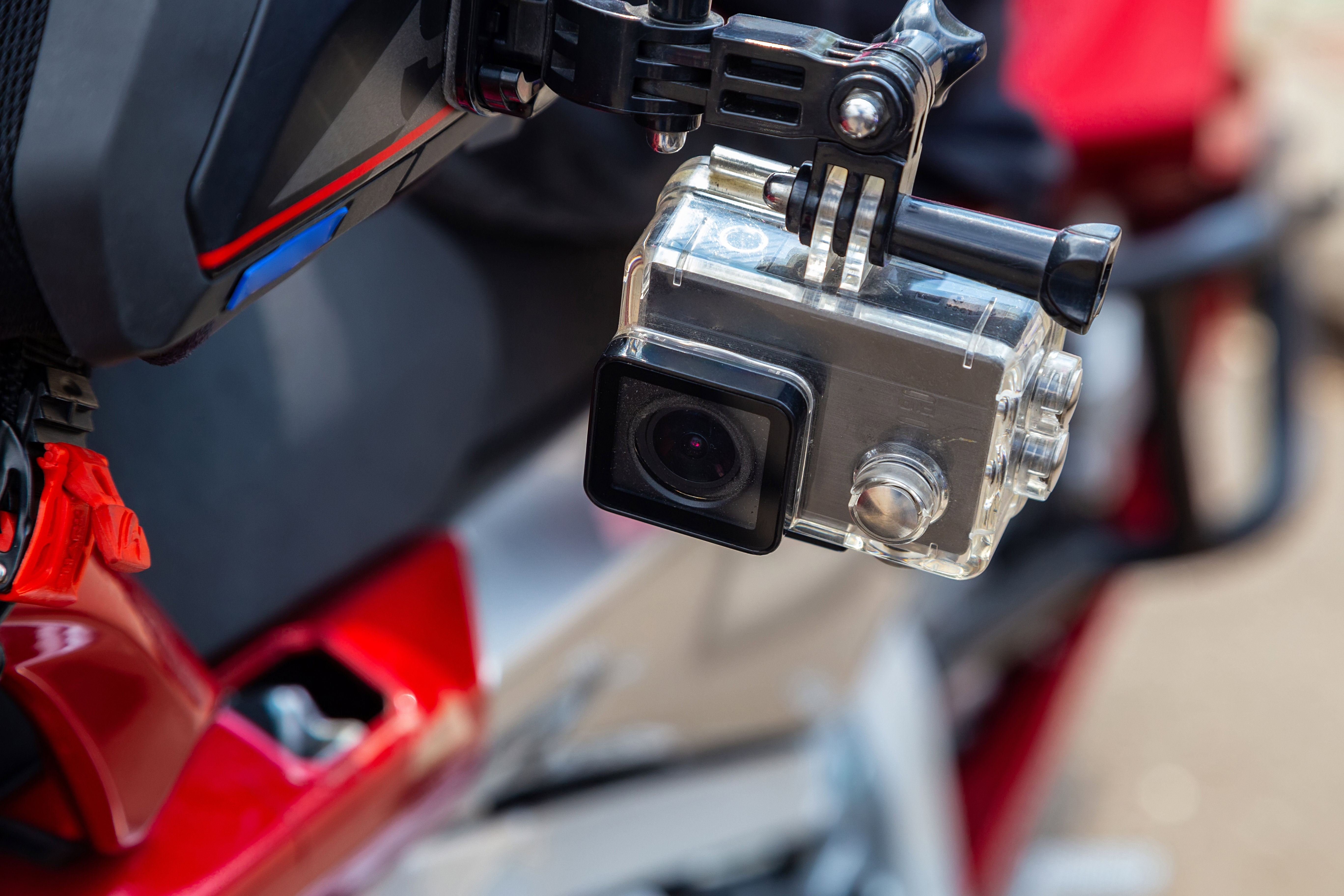
The importance of helmet cameras and bike-mounted cameras
Helmet cameras, action cameras and bike-mounted cameras can be extremely valuable after a motorcycle accident. Unlike car drivers, motorcyclists do not always have passengers who can act as witnesses, and if the rider is seriously injured, they may not be able to explain what happened immediately after the crash.
Camera footage can help show:
- The rider’s speed and road position.
- Whether another vehicle pulled out unexpectedly.
- Whether a driver indicated before turning.
- Whether the rider had right of way.
- Road conditions at the time.
- Traffic flow and visibility.
- The behaviour of other road users before impact.
Footage can also help challenge inaccurate accounts from drivers or insurers. For example, if a driver claims the motorcyclist ‘’came out of nowhere’’, video evidence may show that the rider was clearly visible and travelling appropriately.
There are important points to remember. Cameras should be fitted securely, should not obstruct the rider’s view, and should not distract from riding. Footage should be saved as soon as possible after an accident, because some devices overwrite older files automatically. If the police are involved, they may request footage as part of their investigation.
What if the driver is uninsured or leaves the scene?
Some of the most distressing motorcycle accidents involve uninsured drivers or hit and run collisions. Riders may worry that if the driver has no insurance, or cannot be traced, there is no way to claim compensation. In many cases, that is not true.
The Motor Insurers’ Bureau, known as the MIB, exists to compensate innocent victims of uninsured and untraced drivers. The MIB states that if you are involved in an accident with a driver who is not insured, or who leaves the scene, you may still be able to claim compensation.
This can apply where:
- The driver was uninsured.
- The driver gave false details.
- The driver left the scene and cannot be identified.
- The vehicle was stolen or being used unlawfully, depending on the circumstances.
MIB claims can be more technical than standard insurance claims, and strict rules may apply. Evidence is especially important, including police reports, witness details, photographs, medical records and any camera footage.
Our road traffic accidents team regularly supports clients with these types of claims. We can guide you through the MIB process, help gather and present the right evidence, and ensure your claim is handled correctly from the outset. This can make a significant difference in securing the compensation and support you may be entitled to, particularly where the driver cannot be identified or does not have valid insurance.
How long do you have to claim?
In most motorcycle accident claims in England and Wales, the usual time limit is three years. This means your claim must either be settled or, if necessary, formally issued at court within three years of the accident, or within three years of the date you first became aware that your injury was linked to the accident.
Most claims are resolved without going to court, but this time limit still matters. If the deadline passes, you may lose the right to pursue your claim altogether. This is why it is important not to delay.
Even though three years may seem like a long time, it is always best to seek legal advice as early as possible. Evidence can be lost or become harder to obtain over time. CCTV footage may be deleted, witnesses may be difficult to trace, and the condition of the road or vehicles involved may change. Early advice helps ensure your claim is properly prepared from the outset.
There are some important exceptions to the usual time limit. If a child is injured in a motorcycle accident, for example as a passenger, pedestrian, cyclist, or in another vehicle involved in the collision, the three-year period usually does not begin until their 18th birthday. This means they would normally have until they turn 21 to start a claim, although a parent or guardian can bring a claim on their behalf at any time before then.
Different rules can also apply where someone lacks mental capacity. For example, if a person suffers a serious brain injury in a motorcycle accident and is unable to make decisions for themselves, the time limit may not run in the usual way whilst they lack capacity. In these situations, it is still important to seek advice as early as possible so that the right support and legal steps can be put in place.
For claims involving uninsured or untraced drivers, such as hit and run incidents, strict rules and time limits also apply under the Motor Insurers’ Bureau. These claims can be more complex, so early advice is particularly important to make sure nothing is missed.
What compensation can cover after a motorcycle accident
Compensation is not just about the injury itself. It is intended to reflect the wider impact of the accident on someone’s life, both now and in the future.
A motorcycle accident claim may include compensation for:
- Pain, suffering and loss of amenity, which means the impact on quality of life.
- Loss of earnings if the rider cannot work.
- Future loss of earnings if they cannot return to the same job.
- Medical treatment and rehabilitation.
- Physiotherapy, psychological therapy or specialist pain management.
- Care provided by relatives or professional carers.
- Travel costs to hospital or medical appointments.
- Damage to the motorcycle, helmet, clothing and equipment.
- Home adaptations if mobility is affected.
- Specialist aids, prosthetics or mobility equipment.
- Future care needs in serious injury cases.
For severe injuries, compensation can also include long-term case management, adapted accommodation, private treatment and support with returning to work where possible.
Why rehabilitation matters
For many injured riders, compensation is only one part of the process. Rehabilitation can be just as important. Serious motorcycle injuries may require support from a range of professionals, including orthopaedic consultants, neurologists, physiotherapists, occupational therapists, psychologists, prosthetics experts and vocational rehabilitation specialists.
In some cases, solicitors may be able to seek interim payments. These are payments made before the final settlement, usually where liability has been admitted or where there is strong evidence that the claim will succeed. Interim payments can help fund urgent treatment, care, equipment or accommodation needs while the claim continues.

Protective gear and its role in injury claims
Protective gear cannot prevent every injury, but it can reduce the severity of harm. A properly fitted helmet is legally required when riding a motorcycle on the road in Great Britain, unless a specific exemption applies. Other protective clothing is not always legally required, but it is strongly recommended.
Protective equipment may include:
- A properly fitted helmet.
- Armoured jacket and trousers.
- Gloves.
- Motorcycle boots.
- High-visibility clothing or reflective materials.
- Back protectors or airbag vests.
In a claim, the opposite party may sometimes argue that injuries would have been less severe if better protective gear had been worn. This does not mean the rider cannot claim, but it may become part of a contributory negligence argument. Each case depends on the evidence, including what injuries were suffered and whether different equipment would realistically have changed the outcome.
The role of drivers in motorcycle safety
Motorcycle safety is not only the responsibility of riders. Drivers have a major role to play in preventing collisions.
Drivers can reduce risk by:
- Taking longer to look at junctions.
- Checking mirrors and blind spots before changing lanes.
- Giving motorcyclists enough space.
- Avoiding sudden braking or turning.
- Being patient when riders filter through slow traffic.
- Looking carefully before opening car doors.
- Understanding that motorcycles may be closer or travelling faster than they first appear.
A brief glance is not always enough. Many collisions happen because a driver looks, but does not properly register the motorcycle.
The role of riders in protecting themselves
Riders cannot control the actions of other road users, but they can take steps to reduce risk and protect their position if an accident happens.
Practical steps include:
- Wearing appropriate protective clothing.
- Keeping lights on where appropriate.
- Using high-visibility or reflective gear.
- Maintaining safe road positioning.
- Avoiding riding in blind spots.
- Riding at a speed suitable for the road and weather conditions.
- Keeping the motorcycle well maintained.
- Considering a helmet cam or bike-mounted camera.
- Keeping training refreshed, especially after a break from riding.
These steps are not about blaming riders. They are about recognising that motorcyclists are exposed, and that anything which improves visibility, control or evidence can make a real difference.
How Simpson Millar’s road traffic accident solicitors can help
Motorcycle accident claims often need careful investigation, especially where the rider has been seriously injured or where the other party disputes what happened. Our road traffic accident solicitors can help injured riders and their families understand their rights and take practical steps towards recovery.
Our team can help by:
- Investigating how the collision happened.
- Reviewing police reports, witness evidence, CCTV, dashcam or helmet cam footage.
- Working with accident reconstruction experts where needed.
- Challenging unfair assumptions about motorcyclists.
- Dealing with insurers on your behalf.
- Pursuing claims involving uninsured or untraced drivers through the MIB.
- Seeking interim payments where possible.
- Helping arrange rehabilitation, treatment and support.
- Calculating the full value of the claim, including future care, earnings and equipment needs.
- Supporting families after fatal motorcycle collisions.
A serious motorcycle accident can leave people feeling overwhelmed, especially when injuries affect work, family life and independence. Some riders may be unsure whether they can claim because they were filtering, overtaking, riding on a rural road, or because the other driver has blamed them. In many cases, these concerns can be properly investigated with the right evidence and legal support, helping to establish what really happened and whether a claim can still be made.
If a motorcycle accident was not your fault, or was only partly your fault, you may still be able to make a claim. Speaking to a specialist solicitor early can help protect evidence, avoid missed deadlines and ensure the full impact of the injury is properly understood.
Call us today on 0808 239 5461, or request a callback, for a free, no obligation assessment of your case. We will talk you through your situation, explain the legal options that may be available to you, and outline how we can support you moving forward.