The meaning behind the butterfly symbol
The butterfly is increasingly being used as a symbol in conversations around autism, particularly within more recent acceptance-focused campaigns. Whilst the jigsaw has traditionally been associated with autism, it has been criticised by some for suggesting something is missing or incomplete.
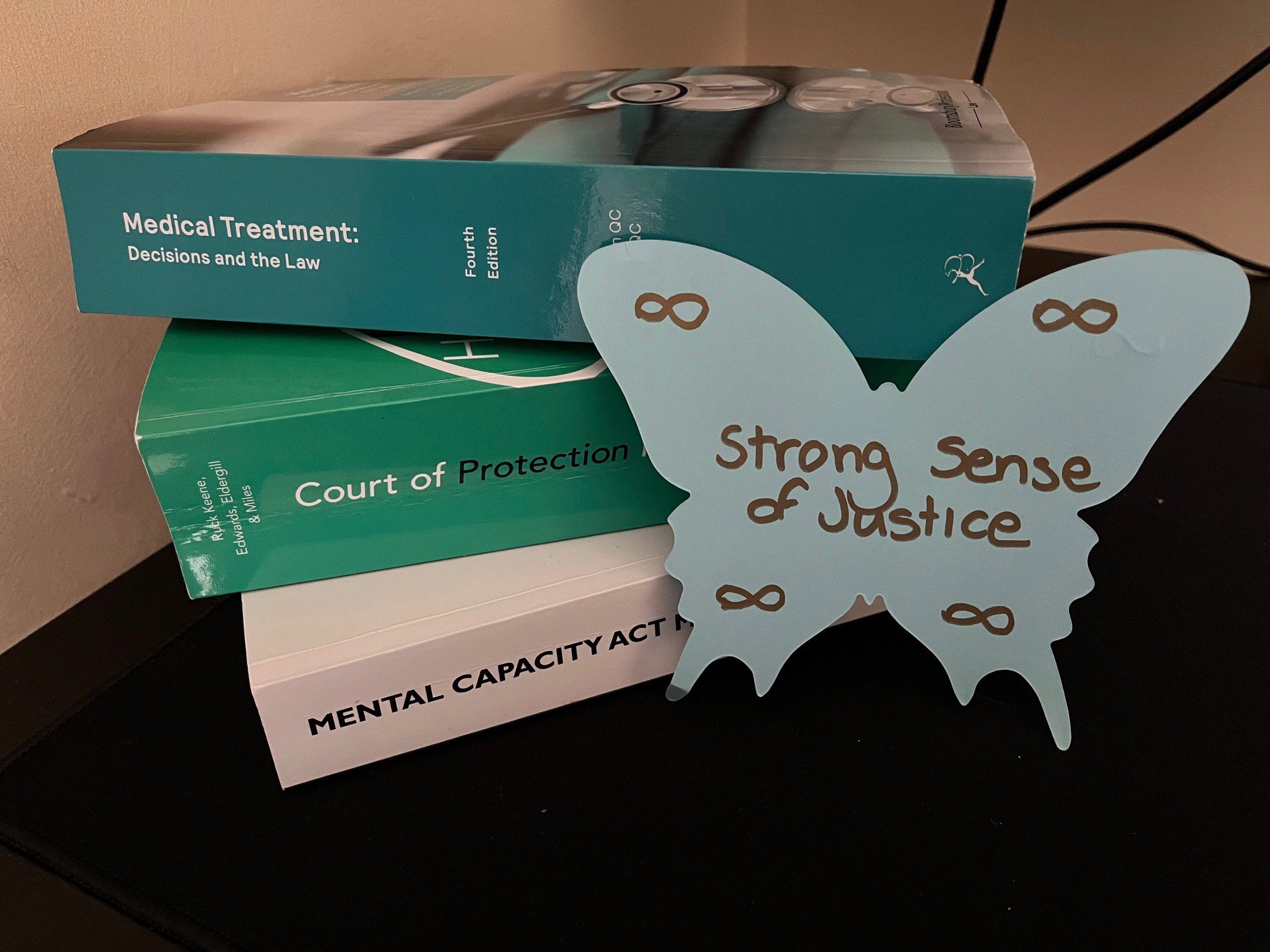
The butterfly offers a different perspective. It represents growth, individuality, and change over time. No two butterflies are the same, and each develops in its own way. This reflects an important reality about autism. Every autistic person has their own strengths, experiences, and support needs, and these can evolve throughout their life.
The butterfly can also represent the idea that understanding takes time. A person’s strengths, preferences, and identity may not always be immediately visible, especially in environments that are not well suited to them. With the right support, those strengths can become clearer and more developed over time.

What autistic adults say their strengths actually are
One of the strongest reasons for taking a more balanced approach comes from autistic adults themselves. In a 2026 study published in the journal Autism, researchers led by Lampinen and colleagues explored how autistic adults describe their own strengths and talents. The study involved autistic participants identifying their abilities in their own words, rather than relying on external assumptions. That is an important starting point, because it reflects lived experience rather than a purely clinical or deficit-based view.
Participants described a wide range of strengths, including logical problem-solving, creativity, kindness, empathy, and other meaningful personal qualities. Supporting this, an article by Simply Psychology, published on 22 January 2026, reported that 98% of participants were able to identify at least one personal strength or talent, with many highlighting skills linked to logical thinking, attention to detail, and organisation.
That matters because it pushes back against two very common and unhelpful ideas. The first is that autism should mainly be understood through deficits. The second is that autistic strengths are only visible when they appear as rare or extraordinary “special skills”. The available research paints a more grounded picture than that. The strengths being discussed are often everyday strengths. They are the sort of qualities that shape how a person learns, works, notices things, approaches relationships, solves problems, or makes sense of the world around them. In other words, they are not just interesting traits on paper. They are qualities with real-life importance.
The strengths we are highlighting, and why they matter
For this campaign, the words being highlighted through the butterfly design are honesty, deep focus, empathy, strong memory, creativity, unique problem solving, loyalty, attention to detail, seeing what others may miss, rational thinking, a strong sense of justice, integrity, reliability, being an exceptionally good friend, visual spatial problem solving, and individuality.
These words work because they reflect qualities that many autistic people may identify with, whilst still leaving room for individuality. It is important not to present them as a checklist that every autistic person will fit. That would simply replace one stereotype with another. The more accurate way to approach them is to say that these are examples of strengths that can be meaningful, valuable, and too often overlooked.
Honesty, for example, is often described by autistic people and by those close to them as a core personal quality. In practice, that can mean directness, clarity, and saying what is meant rather than relying on social performance or ambiguity. A strong sense of justice and integrity can matter deeply too. These qualities may shape how someone responds to fairness, rules, accountability, or the treatment of others. Attention to detail and seeing what others miss can be valuable in education, work, and daily life alike. Creativity, visual thinking, and unique problem solving can influence how a person learns, communicates, and expresses themselves. Deep focus can support expertise, concentration, and persistence. Reliability and loyalty matter in relationships and in professional life. Empathy, which is too often misunderstood in public discussions about autism, is also something that many autistic adults describe in themselves.
Why it is important not to oversimplify “autistic strengths”
At the same time, accuracy matters. If we are going to talk about strengths, we need to do that carefully. One of the most useful findings from the 2023 study is that autistic and non-autistic participants reported many similar strengths overall. The researchers found little evidence for a fixed set of universal “autistic strengths”. Their conclusion was not that strengths do not matter. Quite the opposite. Their conclusion was that strengths-based approaches should focus on the person’s own strengths more generally, rather than relying too heavily on assumptions about traits that are supposed to be specific to autism.
That is a really important distinction. It means we can talk positively and accurately at the same time. We can say that many autistic people identify meaningful strengths, and that recognising those strengths matters. But we should avoid claiming that all autistic people are naturally more logical, more empathetic, more creative, or better at pattern recognition than everyone else. The evidence does not support that kind of blanket statement. What it supports is a more individual, person-centred approach. That approach is better for accuracy, and it is better for autistic people too, because it avoids creating pressure to fit a particular narrative.
Why a strengths-based approach can improve well-being
This is not just about using more positive language. There is clear evidence that recognising and using personal strengths can make a real difference to well-being. A 2023 study found that autistic participants were less likely to recognise their own strengths, and less likely to use them in everyday life, compared to non-autistic participants. Importantly, the study also found that autistic individuals who used their strengths more often reported a better quality of life, improved well-being, and lower levels of anxiety, depression, and stress. This shows that a strengths-based approach is not simply a different way of describing autism. When applied properly, it can support better outcomes by focusing on the individual and what they do well.
That finding is important because it helps explain why this conversation matters in practical terms. Recognising strengths is not about dressing difficult realities up in nicer language. It is about understanding that people are more likely to do well when support is built around who they are, not just around what they find hard. If a person’s strengths are invisible in the way they are assessed or supported, then a key part of who they are is being missed. Over time, that can affect self-esteem, confidence, aspirations, and mental health. If, on the other hand, strengths are recognised and actively supported, that can help build identity, self-advocacy, and a stronger sense of possibility.

The problem with a purely deficit-based lens
A deficit-focused approach can feel deeply limiting for the person on the receiving end of it. When the same conversation keeps returning to difficulty, challenge, concern, and impairment, it can create the impression that autism is mainly about what is wrong. That is not only disheartening, it can also distort decision-making. Schools may focus on behaviour without understanding the child’s actual learning profile. Professionals may underestimate what an autistic adult can understand or communicate. Families may find that support systems concentrate so heavily on problems that they leave very little room to talk about potential, preferences, or what helps someone thrive.
This is one reason the strengths research matters so much. It helps challenge the idea that the only serious or evidence-based way to discuss autism is through difficulty. The research does not deny difficulty. What it does is make clear that difficulty is only part of the picture, and that a fuller picture leads to better support.
Understanding context: the same trait can be a difficulty in one setting and a strength in another
Another important point to understand is that some traits often described as difficulties can look very different depending on the situation. For example, intense focus is sometimes described as a “restricted interest”. In practice, it can also mean being able to concentrate deeply, build knowledge, and develop real expertise in a particular area. Sensory sensitivity is another example. It can be overwhelming in certain environments, especially where there is a lot of noise, light, or activity. At the same time, it can also mean being more aware of detail, noticing changes others might miss, or responding more strongly to surroundings.
As highlighted in the Simply Psychology article discussing the 2026 study, some traits can be understood as having two sides. They may present challenges in one context, but they can also be strengths in another. This is why it is so important to look at the environment as well as the individual. In many cases, the difficulty is not the trait itself, but how well the world around the person supports or accommodates it.
That idea is helpful because it encourages people to think about environment as well as individual difference. A child who is overwhelmed in a noisy classroom may not be struggling because there is something fundamentally wrong with them. An adult who communicates directly may not be lacking insight or empathy. A person who focuses deeply may not need that quality to be “corrected”, but understood and supported in the right setting. When strengths and difficulties are considered in context, the conversation becomes more accurate and more respectful.
Why this matters in education and SEN support
This more balanced understanding of autism is particularly important in Education. In England, the statutory framework for children and young people with special educational needs and disabilities is set out in the SEND Code of Practice: 0 to 25 years, which explains how support should be identified and delivered for children and young people with SEND, including through Education, Health and Care Plans where needed. The government also explains that an Education, Health and Care plan is for children and young people up to the age of 25 who need more support than is available through standard SEN support.
For autistic children, the way needs are described can make a huge difference. If a child is understood only in terms of behaviour, communication difficulty, or school-based challenge, then the support put in place may be too narrow. It may miss how that child learns best, what motivates them, where they show aptitude, or what kind of environment helps them succeed. A child with strong visual thinking, deep focus, attention to detail, or a highly developed sense of fairness may need support, yes, but they also need their education to reflect who they are and what helps them thrive.
That is why it is so important to talk about strengths alongside needs. A strong EHCP should not ignore difficulty, but nor should it present the child as a list of deficits. The best educational support is specific, practical, and built around the whole child. That includes recognising the child’s profile of strengths, because those strengths can and should shape the provision that is put in place. It also helps families advocate more effectively. When parents feel that professionals only see what their child cannot do, trust can break down quickly. A more balanced understanding is not just kinder. It is often far more useful.
Families of autistic children can face delays, refusals, poor provision, unlawful decisions, and a general failure to understand the child properly. Support with SEN and EHCP matters is not only about paperwork or tribunal process. It is about making sure the child is seen clearly, their needs are identified properly, and their strengths are not.

Why this matters in Court of Protection work
This same understanding is equally important in Court of Protection work. The Mental Capacity Act 2005 is built on a clear starting point. A person must be assumed to have capacity unless it is established that they lack it. The Act also makes clear that all practicable steps must be taken to support someone to make their own decision before concluding that they cannot, and that making an unwise decision does not mean a person lacks capacity. These principles are essential when supporting autistic individuals, especially in health and welfare matters where decisions can have a direct impact on a person’s day-to-day life, including their care, living arrangements, and medical treatment.
In practice, autistic people can sometimes be misunderstood in ways that directly affect how their capacity is assessed. Someone may need more time to process information, may communicate in a different way, or may find certain environments or questioning styles overwhelming. Without the right understanding, these differences can be mistaken for a lack of understanding or ability. When autism is viewed only through a deficit-based lens, there is a real risk that support is replaced with control, or that a person’s ability to make decisions is underestimated rather than properly supported.
This is where a strengths-based, person-centred approach becomes so important. Recognising qualities such as logical reasoning, consistency, attention to detail, honesty, and a strong sense of personal values can help professionals build a clearer and more accurate picture of the individual. This does not mean assuming that someone has capacity. It means assessing capacity properly, in line with the law, with the right support in place and a full understanding of how that person communicates and makes decisions. A careful and balanced approach like this helps ensure that decisions are not only lawful, but also genuinely reflect the individual’s rights, preferences, and best interests.
A more complete understanding of autism
Autism Acceptance Week should be about more than simply recognising that autistic people have strengths. It is about improving how autism is understood in practice, across education, healthcare, and legal settings.
The research is clear. Autistic adults describe a wide range of meaningful strengths, and using those strengths is linked to better well-being and quality of life. At the same time, the legal and educational frameworks in the UK both emphasise the importance of understanding the individual, providing the right support, and promoting autonomy wherever possible.
Taken together, this points to a more balanced and accurate approach. One that recognises barriers without allowing them to define the person. One that takes individuality seriously, rather than relying on assumptions. And one that understands that support should enable people to make their own decisions, not replace them.
For families, professionals, and decision-makers, this matters. The way autism is understood can shape the support someone receives, the opportunities available to them, and how their voice is heard.
Autism Acceptance Week is an opportunity to reflect on that. Not just in theory, but in practice. Because a better understanding of autism leads to better support, more informed decisions, and a fairer, more respectful approach for autistic people and their families.