


-
Head injury patients look forward to painless new EEG technique
-
Dated:
15/11/2011
Key Contact:
Phillip Gower
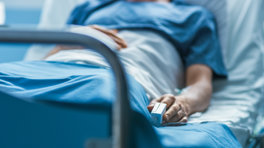
Scientists in the UK and Belgium have discovered a way to communicate with brain damaged patients who appear to be in a vegetative state.
They describe in the medical journal The Lancet how they detected consciousness in the brain by measuring electrical activity.

Known as EEG, this painless technique involves attaching electrodes to the head, which doctors hope can be used in homes and hospitals for diagnostics.
The trials took place at Addenbrooke's Hospital in Cambridge and the University Hospital of Liege in Belgium. All 16 patients involved had been diagnosed as being in a vegetative state, where an individual has no sense of awareness of themselves or their surroundings despite being awake.
The patients were asked to imagine squeezing their right hand or wiggling their toes. Brain activity in 3 of the patients showed they could repeatedly follow commands.
Professor Adrian Owen of the University of Western Ontario, who authored the report, said many areas of the brain that activate when moving also activate when someone imagines doing it.
"We know these 3 patients were conscious as they were able to respond repeatedly to the instructions we had given them," he said. "One of the patients was able to do it more than 100 times."
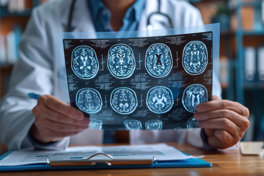
Professor Owen's MRC Cognition and Brain Sciences team in Cambridge previously showed that it was possible to communicate with some vegetative patients using functional magnetic resonance imaging (fMRI).
But because some patients have metal plates or pins, or they cannot remain still, assessment with these scanners remains unavailable for many with brain injury.
However, the EEG device is portable and relatively cheap. "This is exciting because it means we can get out into the community, take it to patients in nursing and care homes, and assess many more patients at the bedside to see if we can detect covert awareness," Prof Owen said.
Paul Matthews, Professor of Clinical Neurosciences at Imperial College London, said the approach suggests a simple, practical way in which some patients might be helped to communicate.
"This innovative work has taken fundamental brain science right to the bedside," he said. "Efforts to further evaluate this and related approach in the clinic should be prioritised."
According to Helen Gill-Thwaites, a consultant in low awareness states at the Royal Hospital for Neuro-disability (RHN) in Putney, a small proportion of patients could find EEG a very useful tool in the diagnostic process.
Phillip Gower of Simpson Millar LLP agreed with Ms Gill-Thwaites that EEG is more of a useful addition to, and not a replacement for, current methods of assessing patients with severe head injury.
"Unfortunately, without proper assessments many patients have been wrongly diagnosed as being in a vegetative state," said Phillip. "Hopefully the new EEG technology will herald better things for people with head injuries."
Get the news direct to your Email Inbox
If you liked this article you can sign up to receive our news articles via email
here:
Subscribe to our Daily News updates
PR Contact
For any PR enquiries please contact:
Christina Savage at RTS Media
on tel: 01942 396701, mobile: 07932 944 008 or send an email.
Disclaimer: No information on this website shall be construed as
legal advice and information is offered for general information purposes only based
on the current law when the information was first displayed on this website. You
should always seek advice from an appropriately qualified solicitor on any specific
legal enquiry. Calls to or from our legal helpline may be recorded for training
and monitoring purposes.
External links are provided for your convenience, but they are beyond the control
of Simpson Millar LLP and no representation is made as to their content. Use or
reliance on any external links and the content thereon provided is at your own risk.
Full terms of use...